Pay Monthly, Sail Rarely: The UK Boat Club Arithmetic Nobody Prints
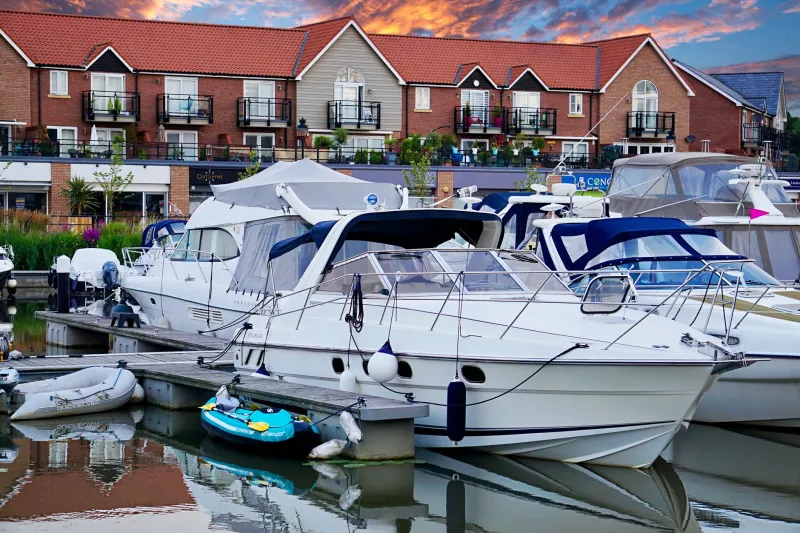
Every boat club brochure sells the same fantasy. You turn up at a Hampshire marina on a bright morning, the RIB is fuelled, the kettle works, and somebody else has already scrubbed the foredeck. No mooring renewal. No lift-out. No spring weekend spent elbow-deep in antifoul. Just a monthly direct debit and the open water.
It is a genuinely good offer for a certain kind of sailor. The trouble is that the brochure is a sales document, not a spreadsheet, and the gap between the two is where most of the disappointment lives. So let's open the books.
The joining fee is not always a fee
Entry costs vary wildly. A small club running a handful of sub-8m motor cruisers may ask for a few hundred pounds down. A larger operation with a Solent fleet, a branded app and a training arm will typically want somewhere between £1,000 and £5,000 to join, and some of that is a refundable deposit rather than a fee.
Ask which is which, in writing. Deposits are usually returned only after a notice period, minus any outstanding damage excess, and occasionally minus an admin charge that appears nowhere on the joining page. If you leave in year one, what exactly comes back? Get a number, not a promise.
What the monthly standing order covers — and what it doesn't
The headline figure usually includes the hull, the berth, insurance for the club's own risk, and basic maintenance. What sits outside it is the interesting part. Common extras include:
- Fuel, either metered per engine hour or billed as a flat ' cruising pack' each month.
- A cleaning contribution if the boat is returned in a state the next member objects to.
- Damage excess, typically £250–£1,000 per incident, charged whether or not you agree it was your fault.
- Guest fees, sometimes per head, sometimes per night aboard.
- Tuition or 'checkout' sails, mandatory at many clubs before you can take a boat unaccompanied.
That last one catches people out. A club that markets itself to newcomers will often require a practical assessment with their own instructor before you're let loose, and while it may be discounted for members, it is rarely free. Budget £150–£400 for the privilege, and ask whether it repeats if you haven't sailed for a season.
The booking window and the sunny Saturday problem
Here is the structural issue no brochure resolves. A club needs enough members to make the fleet pay, and enough boats to make the members happy. Those two numbers are in permanent tension.
The maths is uncomfortable. If a club has forty members and six boats, an equitable share is roughly nine days per boat per season. That is plenty on a wet Tuesday in May. On the first warm Saturday in June, when every member simultaneously remembers why they joined, the booking system becomes a lottery.
Ask specific questions before you sign: How many members per boat? How far ahead can you book? Is there a fair-use cap on peak weekends? What happened last July — did boats sit idle midweek while members fought over Saturdays? A club that cannot answer has either never looked or would rather you didn't.
Swap rules, reciprocity and the small print
Shared fleets need rules, and the rules exist for good reason. But they do shape your season. Typical restrictions include:
- No swapping a booked boat for another on the same day.
- Reciprocal rights at partner clubs limited to a handful of days a year, often excluded in August.
- No subletting — you cannot lend your allocation to a friend.
- Overnight stays capped, sometimes to two nights, sometimes to designated cruising areas.
None of these are unreasonable. All of them mean the fleet is less flexible than owning a hull, and the brochure's phrase 'unlimited access' deserves to be read as 'subject to availability'.
The honest cost per day on the water
Let us put plausible 2026 figures on it. Say a mid-range club charges £2,000 to join, £320 a month, and you sail 25 days across the season. That is £3,840 in subscriptions plus £2,000 up front — about £234 per day in year one, falling to roughly £154 per day in year two and beyond. Add fuel, a checkout course and one damage excess and you are comfortably above £170.
Now the other column. A tidy used 7m cruiser might cost £25,000. A Solent berth runs £4,500–£7,000 a year; insurance £350; maintenance, antifoul and lift-out £1,800; a modest depreciation allowance £1,500. That is around £9,000 a year before fuel. Sail 40 days — achievable when the boat is yours and the forecast is good — and you are at £225 per day. Sail 60 and it drops to £150. Sail 15 because life got busy, and it is £600.
So which one is actually cheaper?
Neither, universally. The club wins on certainty and low commitment; ownership wins on spontaneity and long seasons. The crossover sits somewhere around 25 to 30 days afloat a year, and it moves with every quote you collect.
The real question is not which is cheaper. It is which version of you turns up in July. If you will genuinely take a Wednesday off when the weather gods smile, a hull of your own rewards that instinct. If your boating has to fit around school runs and a demanding job, a club's monthly fee buys you something ownership cannot: the permission to not use it.
Before you sign anything, ask for the member handbook, the peak-season booking log and a written list of every charge outside the subscription. Then run the arithmetic with your own realistic number of days — not the number you'd like, the one you'll actually manage. That figure, not the brochure, is the one that decides it.