Signed, Not Spliced: Why a Mooring Rarely Follows the Boat
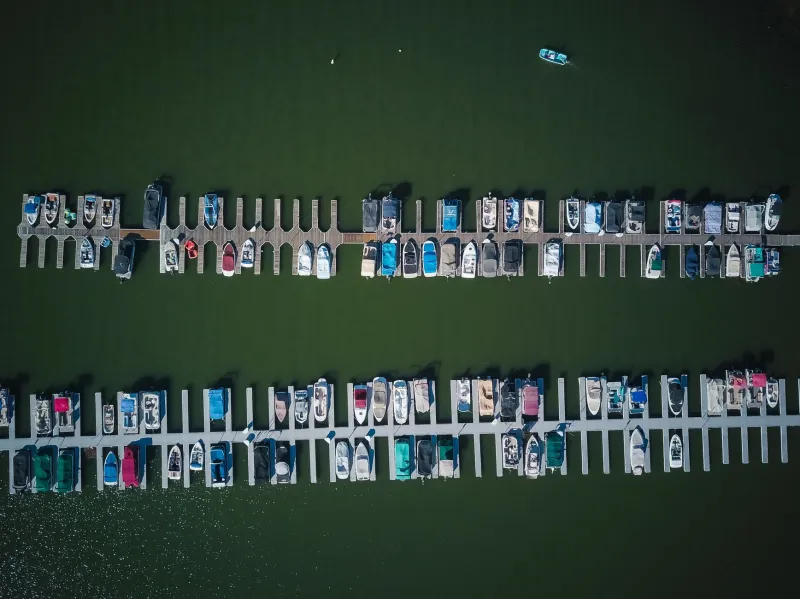
There's a particular kind of advert that makes a tired boat buyer sit up. Thirty-odd feet, sensible hours, tidy canvas — and then the line that does the heavy lifting: mooring available. In a country where a decent Solent berth can involve a wait measured in years, those two words are worth more attention than the engine survey. Trouble is, they're also the two words most likely to be doing unpaid overtime.
Here's the thing to hold onto before anything else: a mooring isn't a part. It doesn't come off the boat, it doesn't go in the inventory, and it isn't implied by the bill of sale. It's a contract between a named person and whoever owns the water — and contracts tend to have opinions about who they're willing to belong to.
A berth is a contract, not a fitting
When you buy a yacht in the UK, you buy a hull, a title and a bundle of liabilities. When you buy a marina berth, you buy permission. The two are entirely separate animals that happen to live at the same address.
Most marina berths in this country operate on an annual licence or agreement with a specific berth holder. It's personal, it's renewable at the operator's discretion, and it usually carries conditions about insurance, liveaboard status, subletting and the size of boat you're allowed to park in it. Some operators — the big group marinas especially — are quietly strict about all four.
What that means in practice is that the berth is the seller's, not the boat's. When the seller sails off into the sunset, so does their agreement, unless someone at the marina office actively agrees otherwise.
Three different things hiding behind 'with mooring'
Not all moorings are created equal, and the word gets used loosely. Broadly you're looking at one of these:
A marina berth under licence. Personal to the holder, usually annual, occasionally renewable on a rolling basis. Transfer to a buyer is a favour the operator may or may not do, and they're entitled to say no, to re-reference you, or to move you to a different pontoon entirely.
A mooring that is itself an asset. Think a fore-and-aft trot mooring on a river, or a harbour mooring granted by a harbour authority, or a swing mooring leased from the Crown Estate or a riparian owner. These can sometimes be sold or assigned — but as a separate transaction, with its own paperwork, its own consent requirements and, frequently, its own fee. It is not automatically included because it appeared in the same photograph.
A club or association mooring. Almost always tied to membership, committee approval and a rulebook. Buy the boat, join the club, get considered. Different thing entirely from buying the berth.
The landlord gets a vote
This is the bit that catches people out. Even where a marina is broadly willing to keep the boat where it is, they'll want to approve the incoming owner. That might mean a referencing check, proof of insurance, a deposit, a chat about whether you plan to live aboard, and a modest administration charge for the paperwork. Some operators will simply offer you the next available berth on their list rather than the one the boat's sitting in, because that berth has already been promised to someone who's been waiting since 2021.
On inland waterways the position is even more stark. Canal & River Trust moorings, for instance, are not transferable with a boat sale — full stop. The mooring is offered to the person, and a change of boat on the same mooring needs its own approval. Anyone advertising a narrowboat 'with a CRT mooring' is either being loose with language or hoping you won't check.
Waiting lists don't inherit
Here's the assumption worth killing early: that buying a boat in a berth puts you at the front of the queue. It doesn't. A waiting list is a queue of people, not a queue of hulls. In some marinas, existing berth holders do get priority when they move to a different size of berth — but that's a perk of being the customer, and the customer is currently the seller.
So before you get emotionally attached to the walk-on pontoon and the 30-second commute to the boat, ring the marina yourself. Not the broker, not the seller — the office. Ask three questions: who is the berth agreement with, is it transferable, and what would I need to do to take it on? Their answer is the only one that counts.
What to check before you offer
- The actual mooring agreement, not a summary of it. Look for the words 'non-transferable', 'personal to the licensee' and 'reversion'.
- Arrears. An unpaid berthing bill can follow the boat out of the marina in the worst cases, and it's a rotten surprise to inherit.
- Notice periods. If the seller's agreement ends in March, your grand plan for a summer season might be built on sand.
- Liveaboard clauses. Even if the seller has been living aboard happily for years, that may be a tolerated arrangement rather than an agreed one.
- Insurance requirements. Many marinas demand a minimum level of third-party cover; check yours matches.
- Consent fees. Ask what the operator charges to approve a change of owner. It's usually small, occasionally not.
Price the berth out of the number
If a berth does transfer, it's genuinely worth something — arguably the price of not spending a year or two in a swinging mooring, a dry stack or a friend's driveway. What it isn't worth is being folded invisibly into the asking price and never mentioned again.
Ask the seller, plainly, what value they've put on the mooring. Ask the marina what a new customer would pay for the same berth today. Then decide whether the premium in the asking price is a fair reflection of the shortcut, or whether it's the boat trade's version of estate-agent optimism. It's perfectly reasonable to offer on the hull and negotiate the berth separately — or to make your offer conditional on written confirmation from the operator that the berth will be transferred to you.
That last point matters more than it sounds. A 'subject to mooring transfer' condition, with a longstop date, gives you a clean way out if the marina says no — and stops you owning a lovely boat with nowhere to put it.
If the answer is no
It happens, and it isn't a disaster. Plenty of good boats are sold without water attached, and plenty of buyers find a temporary berth, a swinging mooring or a season on a trailer while they wait their turn. What you mustn't do is pay a mooring-inclusive price for a boat whose mooring was never on the table.
A berth is a good thing to have. Just remember it's signed, not spliced — and the signature isn't the seller's to give away.