The Engine Gets Its Own Interview: Six Checks Before You Buy a Used Outboard
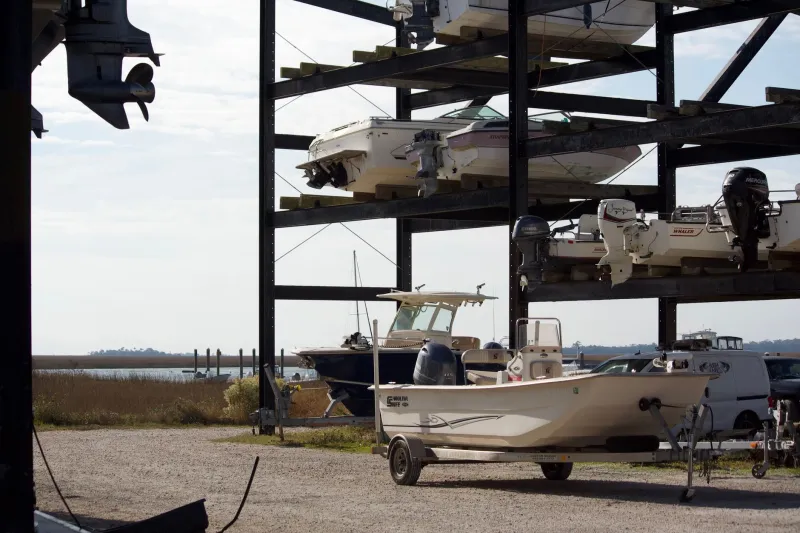
Most boat viewings follow the same script. Everyone walks straight past the engine, crouches by the hull, taps the topsides, and asks deep questions about gelcoat. The outboard gets a hopeful listen on muffs, a nod, and a comment about how tidy it looks.
Which is backwards. On a sub-£30,000 trailer boat or a 20-something-foot cuddy, the engine can easily be a third of the value — and unlike the hull, it can be unbolted, wheeled away and sold on by lunchtime. That combination of expensive and stealable is exactly why a used outboard deserves its own half-hour of suspicion. Pop the cowling, get your hands dirty, and work through these six checks in order.
1. Read the plate before you read the decals
Find the serial plate on the transom bracket or the powerhead. Photograph it. Then compare it to the model stickers on the cowling, the paperwork, and the number written on any bill of sale.
Mismatches are not automatically sinister — cowlings get swapped after a knock, decals fade, and engines get rebadged between marques that share a platform. But a plate that has been drilled out, ground back or covered with a sticker is a different conversation. So is an engine presented as a 2019 when the serial decodes to 2011.
A franchised dealer for that brand will usually run the serial for you over the phone and tell you the model year, the original spec and whether there are outstanding recalls. It takes ten minutes and it's free. Do it before you fall in love with the boat.
2. Ask for the paper trail, then actually ring the workshop
A folder of invoices is worth more than a shiny cowling. You're looking for evidence of the jobs that actually matter: water pump impeller, gearcase oil, anodes, fuel filters, spark plugs, and the timing belt on four-strokes that use one.
An engine with no history isn't a write-off — plenty of owners service their own and keep nothing but a mental note. But it changes the price, because you'll be buying a full service plus a water pump kit on day one.
If there is a history, use it. Ring the workshop named on the invoice and ask whether they remember the engine and what they did. Yards are usually happy to talk, and the answers are revealing. "Oh yes, we told him the leg was taking water" is the kind of sentence that saves you four figures.
3. Run the theft checks, and don't be polite about it
Outboards are stolen to order. A quick, calm check costs nothing: run the serial through the national stolen boat register and through Immobilise, and ask the vendor for photo ID plus proof of purchase. If the engine came with the boat from a dealer, the original invoice should list the serial number.
A genuine seller will find this mildly tedious and comply. A seller who gets defensive, offers a story about a mate who bought it at a boat jumble, or suddenly can't find any paperwork is telling you something. Walk. There is another boat.
Also check that the engine model matches the boat's stated specification — insurers and, on inland waterways, Boat Safety Scheme examiners both care about whether the transom is rated for the power hanging off it.
4. Corrosion is the most honest witness in the engine bay
With the cowling off and a torch in hand, look for what paint can't hide. White powdery blooms around the cylinder head and the base gasket. Furred bolt heads that have never seen a spanner. Staining trails from the tell-tale. Cracked or hardened fuel lines, chafed wiring looms, and terminals going green.
Look at the anodes — if there are any left. An engine run in salt water with anodes worn to stubs has been quietly eating itself. Check the tilt and trim rams for pitting and the hydraulic lines for weeping.
And be wary of a gearcase that has been freshly painted or has brand-new stickers on an old leg. Cosmetic freshening before a sale is normal; a rattle-can respray over corrosion on a 15-year-old engine is often a cover story.
5. Compression, cold start, and the things you can hear
Insist the engine is stone cold when you arrive. A seller who has "just warmed it up for you" has removed your best diagnostic tool.
Bring a compression tester and check every cylinder. Figures should be reasonably close across the set — a spread of more than about ten per cent deserves an explanation, and a low cylinder on a multi-cylinder engine is a negotiation point at best. On smaller engines, a leak-down test tells you even more.
Then start it from cold and watch. It should catch quickly, idle evenly and produce a strong, cool tell-tale within seconds. Steam, an intermittent stream or an overheating alarm are all stop signs. Check the gearshift through forward, neutral and reverse, listen for a clunk in the lower unit, and inspect the propeller shaft for runout and fishing line wrapped behind the prop.
Finally, crack the gearcase drain plug and look at the oil. Milky means water is getting in, and that's a seal job at minimum.
6. Hours are a hint, not a biography
If the engine has an ECU, a dealer can usually pull the hour count — and sometimes the split between idle, cruising and high-load running. That's genuinely useful: 400 hours of trolling is a very different life from 400 hours at wide-open throttle.
Ex-school, ex-rental and ex-charter engines aren't automatically bad buys, but they've had a lot of different hands on the controls and a lot of short, cold starts. Price accordingly. On carburetted engines, also ask how the owner has handled E10 fuel, which is now the standard unleaded at UK pumps and doesn't love sitting in a float bowl for eight months.
The bit everyone skips: run it under load
A hose and muffs tell you the engine starts. It does not tell you it makes power. Push for a sea trial or at minimum a test tank run, and watch the tachometer at wide-open throttle — it should reach the manufacturer's specified rev range with the prop fitted. If it labours well short of that, you're looking at either an over-pitched prop or an engine that's tired.
Budget for a full service, an impeller kit, anodes and gear oil immediately after purchase, and factor that into your offer rather than pretending it isn't coming. Then get the engine added to your insurance policy by serial number on day one — because the thing you've just spent three weeks vetting is precisely the thing someone else would like to unbolt and take.