The Corrosion Clock: Why Anodes Need a Diary, Not a Glance
Photo: Cannon, Burrell, Public domain, via Wikimedia Commons
There's a moment in nearly every pre-purchase survey where the surveyor crouches by the shaft, taps the anode with the handle of a screwdriver, and delivers the verdict: 'they've got life in them.' It sounds like good news, and it usually is. But it is not a timetable, and that's the bit buyers hear wrong.
An anode is a consumable with a burn rate. The lump of metal on your shaft is not a component that passes or fails — it's a fuel gauge, and somebody has just told you the tank is not empty without telling you how fast you're driving.
What the lump of metal is actually doing
Drop two different metals into the same electrolyte and connect them, and one will start to give itself up so the other can survive. That's the galvanic series in a sentence. Your propeller, shaft, skin fittings and sterndrive are the expensive metals you'd like to keep. The anode is the cheap, willing sacrifice bolted on to take the hit first.
Which metal you choose matters more in the UK than most people realise, because our water is not one thing. Aluminium anodes have become the default for salt and mixed water — they cope reasonably with the salinity swings you get in an estuary, and they don't passivate as quickly as zinc. Magnesium is the freshwater answer, for the Lakes, the Broads, the inland lochs and any boat that spends most of its life upriver. Put magnesium in full seawater and you can over-protect: too much current flowing the wrong way is its own problem, and it can lift paint and stress stainless fittings.
So the first question is not 'are they worn?' It's 'are they the right metal for this water?'
Three clocks, all running at once
Most owners think of anode wear as a single number that ticks up with time afloat. In practice, three separate clocks are running.
The immersion clock is the obvious one — months in the water, the electrochemistry quietly doing its thing at a rate set by salinity, temperature and how much bare metal is exposed nearby.
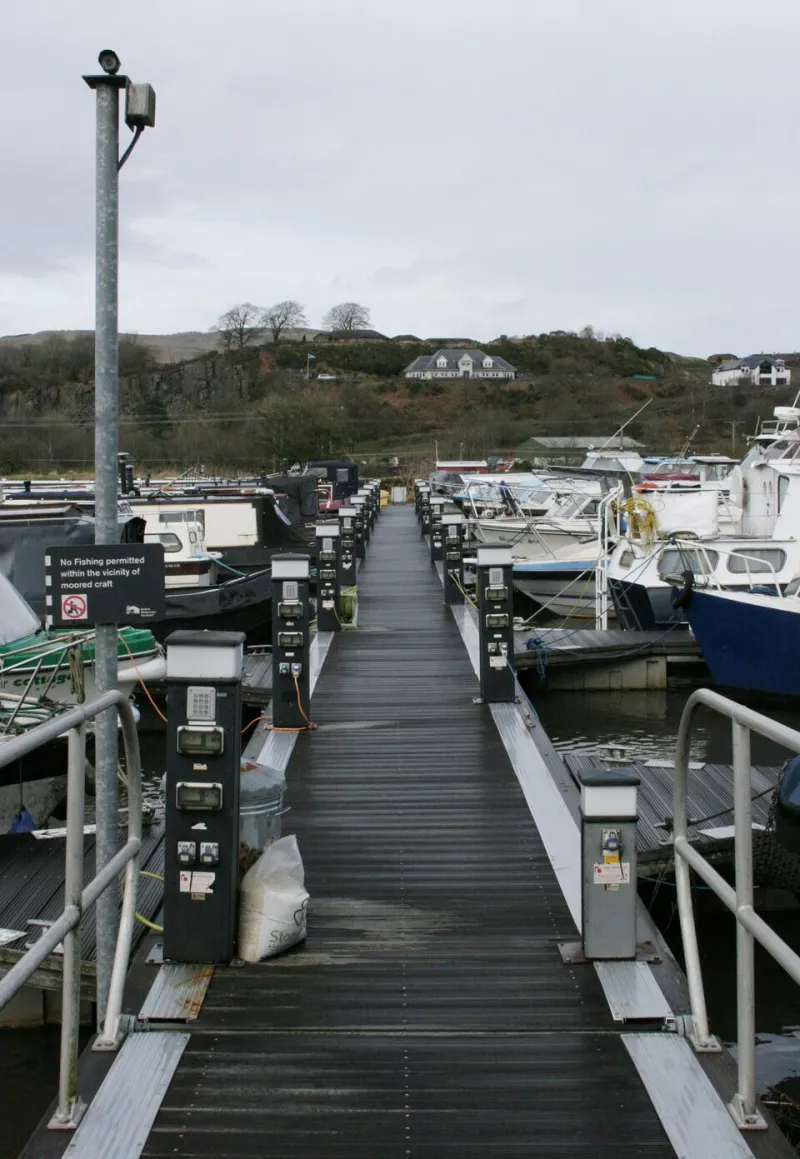
The location clock is the one that catches people out. A berth in a big marina with hundreds of shore-power leads draped around can behave very differently from a swinging mooring in a quiet creek. Stray current is the silent variable: a neighbouring boat with a wiring fault, or an installation missing a galvanic isolator, can turn a well-anoded boat into a donor overnight.
The ashore clock is the one nobody budgets for. Anodes do nothing in air. A boat on the hard for five months is effectively frozen, which is why a lift-out in October and a relaunch in April doesn't erase a season of protection — but it does mean your annual replacement rhythm and your annual lift-out rhythm are not the same thing.
'They look fine' versus the rate of loss
An anode that is 60% consumed might have one more season in it or three weeks, depending entirely on how fast it got to 60%. The percentage is a snapshot. The rate is the story.
Which is why the single most useful thing you can do costs nothing: weigh the old anode, weigh a new one, write both numbers in a notebook with the date. Do it every lift-out. After two or three years you will know your boat's personal corrosion calendar better than any surveyor passing through for ninety minutes.
While you're down there, look for the things the tap test misses:
- Fixings. A corroded mounting bolt means the anode has lost electrical contact. It is now decoration. This is common and cheap to fix — and it is the difference between a protected prop and an expensive one.
- Pitting and chalky surface. Uneven wear suggests uneven current, not just time.
- The forgotten anodes. Shaft, prop nut, trim tabs, bow thruster tunnel, sterndrive, saildrive collar — and inside the boat, the pencil anodes in the raw-water circuit, heat exchanger and sea strainers.
- Bonding continuity. A disconnected bonding wire quietly removes half your protection while everything still looks tidy.
The brackish factor
Boats kept up an estuary — the upper Deben, the Crouch, the Tamar above the bridges, the muddy top end of a harbour — sit in water whose salinity swings with the tide and the rainfall. Weaker electrolyte generally means slower galvanic activity, but it also means anodes that have been selected for seawater may be doing a slightly different job than intended. If your boat lives in half-strength water, it's worth asking a corrosion surveyor rather than assuming the standard set-up applies.
Stray current: the unhurried version
If anodes are vanishing noticeably faster than in previous years, and nothing else has changed, the marina is the first suspect. Signs worth taking seriously: rapid loss on a boat that used to be steady, pitting on the prop rather than on the anodes, paint blistering near fittings, or a sudden interest from the yard in fitting an isolation transformer.
A galvanic isolator or isolation transformer is not a sales gimmick. On a pontoon with shore power permanently connected, it is basic hygiene.
Budgeting for it properly
Set a corrosion line in the annual budget rather than treating anodes as a nuisance purchase. For a typical 30ft cruiser, a set of hull and shaft anodes might run £80–£200 depending on how many you need and which metal; the lift, the scrub and the yard time usually cost more than the metal. If you lift twice a year, the anode cost is almost the cheap part.
The number worth watching is the trend. Two hundred pounds a year, steady, is a healthy boat. Two hundred pounds that was eighty last year is a question that needs answering.
The calendar, not the checklist
So when the survey says the anodes have life in them, accept it as one data point and start your own record on day one. Date, weight, condition, location, hours connected to shore power. That's the corrosion clock. Everything else is guesswork with a screwdriver.