Two Berths, One Owner: The Arithmetic of Buying Before You Sell
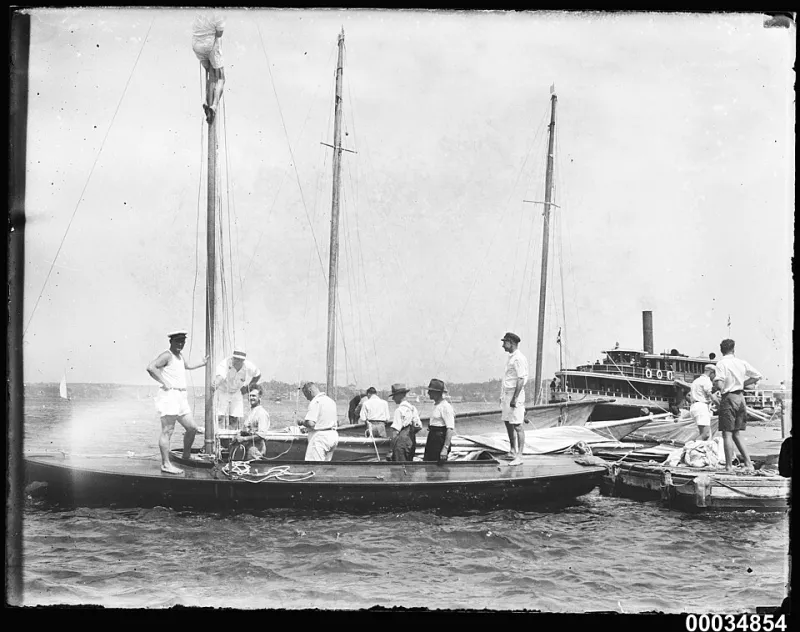
Photo: Australian National Maritime Museum on The Commons, No restrictions, via Wikimedia Commons
Every upgrade conversation reaches the same fork. You've found the next boat. Your current one hasn't sold. Do you buy first and sell after, or sell first and hope something similar comes up?
Most people buy first. It feels like momentum. It is also, quite often, the most expensive decision in the whole transaction — and unlike the survey bill, it doesn't arrive as a single painful invoice. It leaks out monthly.
Two of everything
Let's put a real boat behind the numbers. A 32ft cruiser-racer, kept on a mid-range south-coast pontoon.
- Annual mooring: £4,200
- Insurance: £480
- Winter lift, scrub and hardstanding: £950
- Routine maintenance, antifoul, bits: £1,400
- Annual engine service and odds and ends: £400
That's roughly £7,400 a year, or about £615 a month, before you've turned a wheel or filled a tank. Own two boats through one winter and you're paying that twice.
Now the part people miss: the costs aren't evenly spread. A boat sitting unsold from October to March will still want its lift-out, its cover, its insurance renewal and its mooring renewal — while generating precisely zero sailing. The overlap months are disproportionately the expensive ones.
Seasonality isn't a rounding error
UK boats sell in a curve. Demand builds from late February, peaks around April to June, and softens from September. A tidy, sensibly priced boat listed in early March can move in weeks. The same boat listed in November may sit until spring, and the seller who's paying two moorings starts to get twitchy.
That twitchiness costs money. A 5–8% price cut on a £60,000 boat is £3,000–£4,800 — which may be more than the overlap you were trying to avoid. This is the crux of the argument: bridging the gap is only rational if the gap is short. If you're bridging into the wrong half of the year, you're paying twice: once for the second berth, and again in the discount you eventually accept.
The deposit doesn't care about your buyer
Here's where the arithmetic gets sharp. You pay a 10% deposit on the new boat — say £6,000 — subject to survey. That deposit is typically protected by your survey window, not by your own sale completing. If your buyer's survey throws up a problem and the chain collapses, you are the one who has to decide whether to complete on the new boat anyway, or walk away and negotiate about the deposit.
That is a genuinely uncomfortable position, and it is entirely avoidable. Ask the broker directly: what happens to my deposit if my sale falls through? Some will hold it against a future purchase, some will return it, many won't. Get the answer in writing.
Surveys don't run to your schedule
Selling takes longer than sellers think, and almost all of that extra time is in other people's diaries. A serious buyer appears, then their surveyor is booked for ten days' time, then the lift-out slot is another week, then there's a query about the rigging report, then the buyer wants to renegotiate a figure that has nothing to do with the boat's actual condition.
Six to ten weeks from offer to money in the bank is normal in the UK. Eight to twelve is not unusual. Plan the overlap on the pessimistic number, not the optimistic one — and remember the buyer's timeline is not yours to control.
The emotional leak
This is the part that doesn't appear in a spreadsheet, so it gets ignored, and it's usually the real driver.
The moment you pay a deposit on the new boat, you've moved on. Your kit migrates. You stop maintaining the old one properly, because why would you? You start describing it as 'the old boat' to people who are thinking about buying it, which is not a great sales technique. The listing photos go stale. You accept a lower offer because you're done with it.
None of that is irrational. It's just a cost, and it should be counted.
The middle paths worth asking about
Before assuming you must choose between two extremes, there are options:
- Part exchange. Some brokers will take your boat against the one you're buying. You'll get less than a private sale, but you get certainty, one transaction and no double mooring.
- Subject-to-sale clauses. Some sellers will accept an offer conditional on your boat selling. Not all, and not in a hot market — but worth asking rather than assuming.
- Brokerage with a bridging arrangement. A few brokers will discuss holding the boat on deposit while your sale runs, particularly in a slow market.
- A mooring you can surrender or sublet. If your berth allows a short gap or a transfer, the overlap cost drops sharply. Check the terms before you assume.
The decision rule
Strip out the excitement and ask one question: how long, realistically, will the overlap run?
Under six weeks, in a sensible season, with a boat that's priced to move — buy first. The convenience is probably worth the couple of thousand pounds, and you avoid the risk of losing the boat you actually want.
Over three months, or crossing a winter, or in a softening market — sell first. Rent a berth for the gap if you can, keep the cash, and go shopping in the spring with a clean balance sheet. If the exact boat doesn't reappear, another one will. There is always another boat. There is not always another £7,000.