The Winning Bid Is Just the Entry Fee: A UK Auction Boat's Real Bill

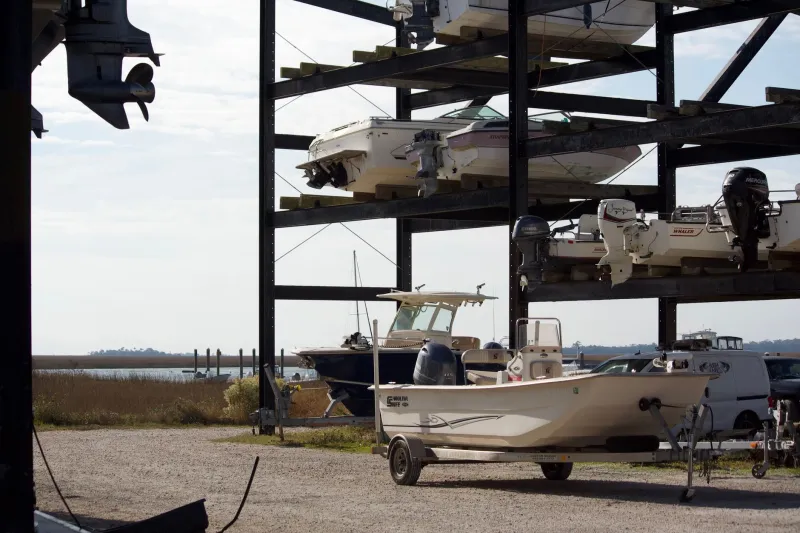
Photo: UK boatyard auction boat on stands winter marina, via upload.wikimedia.org
Auctions have a way of making everything look like a bargain. A boat that would be listed at £30,000 in a marina brokerage turns up online with a guide of £18,000, a blurry photo of the stern and the words 'sold as seen'. For about thirty seconds, you can convince yourself you have found the deal of the year.
Then you read the terms. Buyer's premium. VAT status to be confirmed. Removal within fourteen days. Storage charged from the fall of the hammer. No sea trial. No warranty. And a viewing that lasted long enough to establish that the boat floats, or at least did at some point.
None of that means auction boats are bad buys. It means they are conditional buys. The price on the screen is an entry fee, not the final bill. If you go in with that mindset, a UK auction can be a sensible route to a project, a trade boat or a familiar model at a keen price. If you go in thinking you are buying a turnkey cruiser, the paperwork will correct you.
The premium is not a rounding error
Most UK auction houses and online disposal platforms charge a buyer's premium, often somewhere around ten to fifteen per cent of the hammer price, plus VAT on that premium. Broker-led auctions may fold their fee into different terms, but the principle is the same: somebody has to pay for the catalogue, the yard time and the admin.
On an £18,000 bid, a fifteen per cent premium is £2,700. Add VAT on the premium and you are already well past £3,000 before you have paid a penny for storage or transport. That changes the maths. The boat you thought was £18,000 is really a £21,000 boat, and that is before you find out whether the engine turns over.
This is not a reason to avoid auctions. It is a reason to write your maximum bid down before the auction starts, then subtract the premium, VAT, removal and a realistic repair allowance. What is left is your actual bid ceiling. Most auction regret comes from bidding to the top of your budget and then discovering the extras were never in it.
VAT: the question that follows the boat
In the UK, VAT evidence matters. A boat may be VAT paid, VAT exempt, deemed VAT paid under the old rules, or simply undocumented. Auction catalogues often say 'VAT status to be confirmed' because the seller has not supplied the paperwork or the vessel has passed through several hands.
For a private UK buyer keeping the boat in the UK, that may not be an immediate problem. For anyone planning to sell on, move the boat abroad or keep it in a marina that asks awkward questions, missing VAT evidence can become a discount you have to offer later. Ask what documents exist before you bid: original invoice, customs paperwork, a builder's certificate, a bill of sale chain. If the auction house cannot show them, price the uncertainty in.
The same goes for title. An auction boat may come from a finance repossession, an estate sale, a marina disposal or a yard clearing unpaid bills. The auction terms will usually transfer whatever title the seller has, not a guarantee that the boat is free of every claim. Read the conditions. If the paperwork is thin, take advice before the hammer falls, not after.
The clock starts at the fall of the gavel
Auction boats are usually sold with a removal deadline. It might be seven days, fourteen days or a month, depending on the yard. After that, storage charges begin, often per day and sometimes at rates that make marina fees look gentle.
This is where the bargain can quietly unravel. You win on a Friday. The boat is in Cornwall. You live in Leeds. The yard wants it gone by the following Friday, but the haulier cannot collect for three weeks and the boat has no trailer. Suddenly you are paying for yard storage, arranging a lift-out and wondering why you did not budget for logistics.
Before you bid, phone the yard. Ask how the boat will be released, whether a crane or slipway is needed, what notice the haulier must give and whether the auction house can recommend a local contractor. Get a removal quote in writing if you can. A cheap boat in a distant yard is not cheap if moving it costs more than the boat.
No sea trial, no soft landing
Auctions rarely offer sea trials. You might get a viewing afloat, an engine start on the hard or a brief inspection, but you are not going to take the boat out for an hour and see what happens when you open the throttle. That means you are buying condition risk.
For a small outboard-powered boat, that risk may be manageable. For a diesel cruiser with a sterndrive, a complex electrical system and a hull that has not been out of the water in two years, it is a different proposition. Budget for a survey if the terms allow it, or at least a mechanic's inspection. If the auction does not permit either, assume the worst and price accordingly.
This is also where the 'sold as seen' phrase does real work. It does not mean the boat is worthless. It means the auction house is not going to be your after-sales department. You are buying a set of possibilities, and some of those possibilities will cost money.
Build a bid ceiling that survives the extras
A practical auction budget has five lines: hammer price, buyer's premium and VAT, removal and transport, immediate safety or compliance work, and a contingency. The contingency is not pessimism. It is the cost of not being able to test the boat properly.
If the numbers still look attractive after all five lines, bid with confidence. If they only work because you have assumed the engine is fine, the sails are serviceable and the mooring will transfer, you are not bidding on a boat. You are bidding on a hope.
Auctions can be a good way to buy in the UK, especially in the quieter months when yards want space and sellers want certainty. But the hammer is not the hull. It is the starting gun for a purchase that still has to be surveyed, paid for, moved and made yours. Treat it as a conditional buy, keep the paperwork close and let the final bill, not the guide price, decide whether you raise your hand.