When the Harbour Says Wait: Planning a UK Passage Around Bars, Sills and Shallow Water
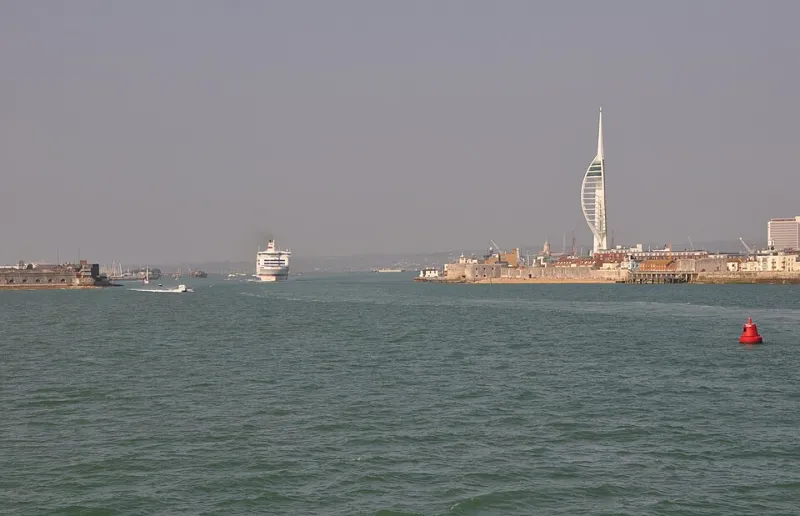
Photo: Lewis Clarke , CC BY-SA 2.0, via Wikimedia Commons
There is a particular kind of quiet that settles over a boat waiting off a harbour mouth. The chart plotter says the waypoint is close. The almanac says the bar has a window. The sea, meanwhile, is doing something in between — not obviously dangerous, not obviously friendly, just enough to make you wonder whether the half-hour you saved by leaving early was worth the ten minutes you are now spending watching a line of white water. Harbour bars and tide sills are the least glamorous part of UK coastal cruising, and the most decisive. They set the timetable whether you like it or not.
A bar is not a pub, and a sill is not a suggestion
A harbour bar is the shallow ridge of sand or shingle that builds across an entrance. Some are soft and shifting, some are practically geological. A sill is the same idea in masonry or rock, often at the entrance to a locked basin or a drying harbour. Both have one thing in common: they do not care about your plans. They care about the height of tide, the swell, the wind direction and how much water your boat draws.
The almanac will usually give you a height of tide that clears the bar — something like '1.8m above chart datum' — plus a note about swell. That note is not boilerplate. A bar that is perfectly passable on a neap tide with a metre of swell can become a different proposition when the same height of tide arrives with three metres of Atlantic swell behind it. The water depth is only half the story. The other half is what the water is doing as it crosses the shallows.
Read the almanac like a local, not like a lawyer
Reeds and the various harbour guides are excellent, but they are written to be cautious. The declared depth over a bar is often the least you can expect, not the most. If the almanac says two metres at high water springs, treat that as a number to work with, not a guarantee. Look for the secondary port data, the tidal curves and the notes about 'moderate swell' or 'breaking in fresh onshore winds'. Those phrases are doing a lot of work.
It also helps to know which tide you are actually getting. A big spring tide gives you more water but also more movement. A neap gives you less range but often a longer usable window, because the tide does not rush away as fast. For a shallow-draft boat, a neap can sometimes be the easier day. For a fin keeler drawing 1.8 metres, the spring tide may be the only practical option — and the window may be narrower than you think because the rise and fall happens fastest around half-tide.
Three numbers decide the day: draft, speed and the window
Start with your draft. Add the under-keel clearance you are genuinely comfortable with — not the absolute minimum, but the margin that lets you stop worrying and concentrate on the entrance. Add a bit for swell, because a boat does not stay at one depth. That gives you the height of tide you need. Then look at the tide curve and work out when that height occurs and how long it lasts.
Now add your boat's cruising speed. A slower boat needs a longer window, because the passage to the bar may take three hours and the window may only be two. This is where a lot of plans fall apart: the tide is right at the bar, but only if you are there at the right moment. If your boat does six knots and the distance from your berth is thirty miles, you are not going to hit a two-hour window unless you leave at an unsociable hour or accept a night passage. That is not a failure of seamanship; it is just arithmetic.
A useful trick is to build the plan backwards. Pick the latest time you are happy to cross the bar, then work back to the latest departure time. Then pick the earliest you are happy to cross and work back again. The gap between those two departures is your realistic day. If the gap is less than an hour, the passage is not a day sail — it is a commitment.
Ask the harbourmaster the questions the almanac cannot answer
Harbourmasters and local boatmen know things that do not make it into print. Ask specifically: has the bar shifted since the last survey? Are there marks or leading lines that are unreliable? Does the entrance break in a particular wind direction even when the tide is right? Is there a local convention about waiting off the entrance rather than pushing through? And, crucially, what is the bail-out if you arrive and it looks wrong?
A good question is: 'If I draw 1.5 metres and I am arriving at high water on a spring tide with a force four onshore, would you go out?' The answer will tell you more than any table. You are not looking for permission; you are looking for the local pattern. The same goes for sills at locked basins — ask whether the gate operates on the tide or on a schedule, and what happens if you miss the last opening.
Wind against tide changes the conversation
A bar that is benign in calm conditions can become aggressive when wind opposes tide. The classic UK scenario is a strong south-westerly against an ebb tide at an exposed entrance. The water stacks up, the swell steepens and the passage that looked fine on paper becomes a waiting game. If the wind and tide are going to be opposed at the time you plan to cross, either shift your timing or shift your destination. There is no shame in spending an hour hove-to or sailing slowly offshore until the worst of it passes. The bar is not going anywhere.
Keep a plan B that is actually a plan
Every bar passage needs a bail-out. Not a vague intention to 'go somewhere else', but a named alternative harbour or anchorage that works in the same wind and tide. If the bar says no, you need to know where you are going instead — and whether that place has its own sill, gate or depth problem. Two bail-outs are better than one, especially on a weekend when every other boat has the same idea.
It also helps to decide in advance what 'no' looks like. Is it a line of white water across the entrance? Is it a swell breaking further out than the chart suggests? Is it the harbourmaster's flag or a local boat turning away? Write it down before you leave. Decisions made at the entrance, with the engine running and the crew watching, are rarely the calmest ones.
The passage is the plan
A UK coastal passage built around a harbour bar is not a compromise. It is just a different kind of planning — one where the water sets the schedule and the boat has to fit. Get the almanac notes, the tide curve and your own draft into the same conversation, ask the local questions and keep a real alternative in your pocket. Then the bar stops being the boss and becomes what it should be: a gate you know how to open, and a gate you are perfectly happy to leave shut.