The Dinghy Decides the Day: Why the Tender Deserves Its Own Specification
There's a moment in every new ownership story where the boat is bought, the berth is sorted, the insurance is in place, and then someone asks the question that sinks the mood: what are we doing about the dinghy? It's usually asked the week the boat goes in the water, which is the worst possible time. Because the tender isn't a freebie that comes with the mooring, and it isn't a £200 impulse buy at the boat show either. Get it wrong and you'll spend the season looking at your boat from the shore, or looking at your tender from the boat, wondering why neither of you is moving.
Start With the Mother Ship, Not the Catalogue
A tender's first job is to fit. Not to look good on the pontoon, not to have the most horsepower for the money, but to fit — on the davits, in the locker, on the foredeck, or behind the transom without dragging the bow down.
For most yachts in the 8–12 metre bracket, something between 2.4 and 3.2 metres is the sensible window. Below that you're in bathtub territory, especially with two adults and a shopping bag. Above it, you've essentially bought a second boat and you'll need to store, launch and insure it like one.
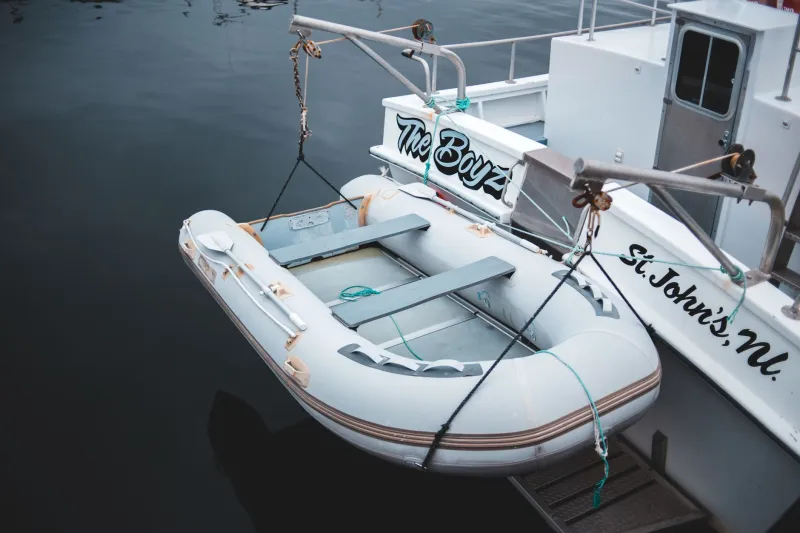
Weight matters more than length. A 3-metre airdeck inflatable might come in around 35–45kg with the floor in, which is fine on davits and miserable on a foredeck. A small RIB with a solid hull and a console can double that before you've bolted an outboard on. If your davits are rated to 50kg a side, that's the number, not a suggestion.
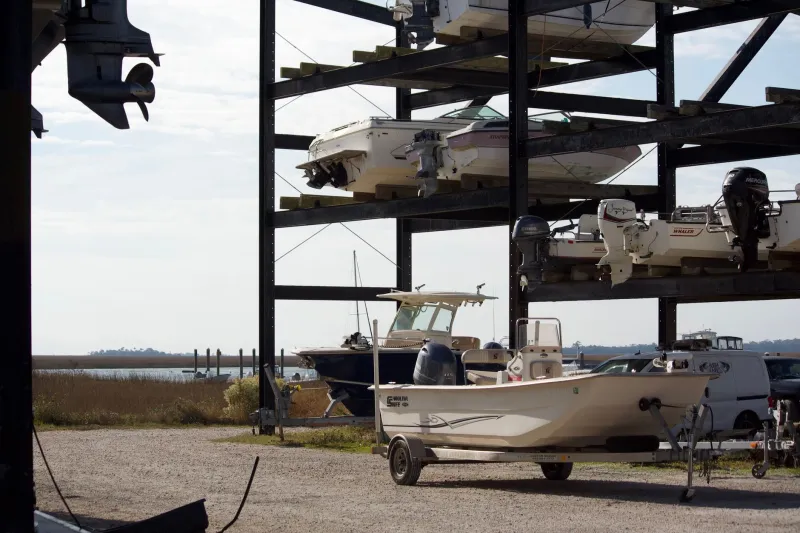
Then there's the berth. Some marinas measure your overall footprint and don't much care whether the tender is stowed on deck or swinging off the back. Others will charge you for the extra metre, or politely ask you to keep the tender ashore. A few won't let you tow inside the harbour at all. None of this is usually in the brochure — it's in the berthing agreement, the one with the small print.
Davits, Towing, or the Swim Platform Compromise
There are three honest ways to keep a tender on a UK boat, and each has a bill attached.
Davits are the tidiest solution and the most expensive. A pair of stainless davits is rarely under £800 fitted, and can run to several thousand once you've reinforced the transom, added a lifting harness and replaced the blocks that came with the boat in 1998. The upside is that the tender is up, out of the water and not quietly filling with rain.
Towing is free until it isn't. A towed tender slows you down, hunts about in a chop, and has a habit of finding mooring lines at the worst moment. It also needs a painter long enough to keep it clear of the prop and short enough not to garrott anyone in the marina. Some harbour authorities treat a towed tender as a separate vessel for dues purposes, and a few flatly ban towing in the inner harbour.
Snap davits or a swim-platform cradle sit in the middle. Cheaper than proper davits, kinder than towing, but only work if your transom or platform is genuinely up to the load and you can still get aboard with the tender in place.
Oars, Electric, or the Petrol Question
A 2.5 to 4hp outboard is the default for a reason: light enough to lift, enough punch to push a loaded dinghy against a Solent chop, and simple enough to service on the kitchen table. But petrol on board comes with its own paperwork. Fuel has to live somewhere ventilated and legal, and a can of unleaded in a cockpit locker is the sort of thing that makes insurers write letters.
Electric outboards have come on a long way and suit harbour-hopping and short shore runs, but range and cold-weather performance are still real limitations in a UK winter. Oars are unfashionable and completely dependable, and every tender should carry a pair regardless of what's bolted to the transom.
Don't forget the pump, the repair kit, the painter, the anchor, and the little bag of bits that lives in the bow. None of it is expensive on its own; all of it adds up.
The Bill Nobody Prints
A realistic UK tender budget for a 10-metre yacht looks something like this: £900–£2,500 for a decent inflatable or small RIB, £600–£1,800 for an outboard, £150–£400 for a cover and pump, £80–£250 for a launching trolley if you're keeping it ashore, and £800–£3,000 for davits if you're not. Add insurance — often a modest addition to the main policy, but worth declaring — and some form of harbour registration or dues in the places that require it.
Then there's storage. A tender left inflated on a mooring all winter will find every UV ray in the county. A tender stored in a garage will need room you may not have. A tender left on the foredeck will chafe something, guaranteed.
A Spec Sheet Worth Filling In
Before you pay for anything, write down four numbers: the maximum weight your davits or deck can take, the longest tender that fits without fouling the pushpit or the mooring lines, the maximum you're willing to lift by hand, and the total you're willing to spend including the engine and the extras.
Those four numbers will rule out about two-thirds of what's on the used market, which is a feature, not a bug. The right tender is the one you can launch alone, in the wind, without swearing — because that's the one that gets used. And a used tender is a used boat: check the tubes for UV damage, the seams for lifting, the valves for leaks and the outboard for the same things you'd check on the mother ship.
The hull gets the survey and the sea trial. The tender gets the shrug. Which is a bit backwards, really, given it's the thing that decides whether you go ashore for dinner or eat beans on the mooring for the third night running.