Shared Custody of a Boat: The Paperwork That Saves the Friendship

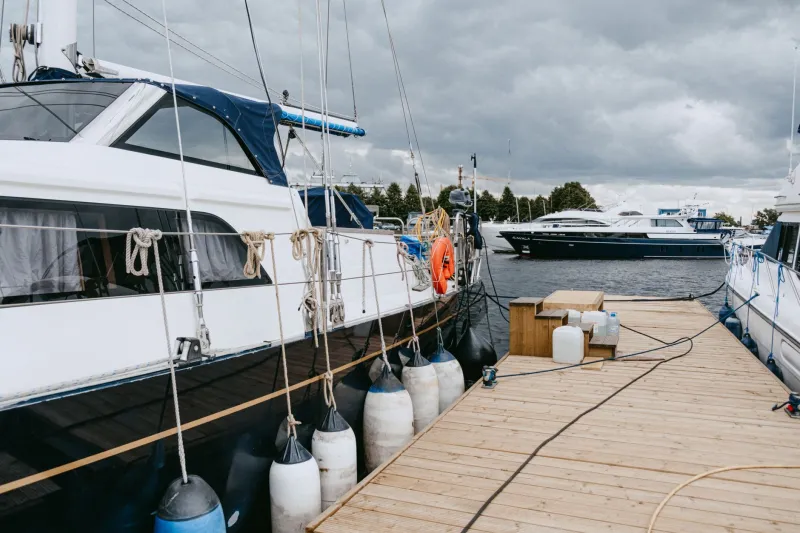
Photo: Prof Ranga Sai, CC0, via Wikimedia Commons
You can picture it now: four mates, one tidy little yacht on the Hamble, a rota that actually works, and a summer of spontaneous evening sails. The dream is real. The bit that sinks it is usually not the sailing — it’s the paperwork nobody wanted to draft in the pub.
Shared ownership, syndicates, fractional boat schemes: call it what you like. In the UK it’s a genuinely sensible way to get afloat for less than the price of a new kitchen. But the arithmetic and the agreement need to be sorted before anyone signs a cheque, not after the first engine bill lands.
Start with the awkward maths, not the boat
A £30,000 used yacht split four ways looks like £7,500 each. Lovely. Then the annual running costs arrive. A Solent berth might be £3,000–£5,000 a year; insurance £300–£600; lift-out, antifoul and winterisation £1,000–£2,000; general maintenance another £1,000; plus the engine fund. That last one is the friendship-killer. Put £750–£1,000 per owner per year into a ring-fenced pot, and agree what it can be spent on without a group vote.
Don’t forget the boring stuff: safety kit, mooring lines, charts, a new battery every few years, and the fact that boats depreciate. A shared boat is not an investment. It’s a hobby with a hull.
The honest split is rarely “divide everything by four”. Some owners use the boat more, some live closer, some have more mechanical sympathy. Decide whether costs are equal shares or weighted by usage. Then write it down. If one person is doing all the fettling, either pay them or reduce their share. Resentment is more expensive than a new impeller.
The berth is a contract, not a vibe
Whose name is on the marina agreement? This matters more than most buyers realise. Many UK marinas don’t allow subletting, and some aren’t keen on multiple named owners. If one person holds the berth, the others are effectively guests. If that person moves, sells up or falls out with the group, the boat has nowhere to live.
Ask the marina in writing what they allow. Ideally, the berth contract names the syndicate or all owners. If that’s not possible, add a clause in your agreement covering what happens if the berth-holder exits. A boat without a berth is a very heavy trailer.
Insurance: named, not assumed
A standard policy in one person’s name may not cover the others properly. Tell the insurer it’s jointly owned and get every owner named. If you hold the boat through a limited company, insure it as a company asset. Some insurers are fine with syndicates; others aren’t. A claim declined because the paperwork didn’t match is a brutal way to learn this lesson.
The agreement: what it actually needs to say
A solicitor doesn’t need to draft a 40-page document for a £30,000 boat, but you do need something more robust than a WhatsApp thread. The syndicate agreement should cover:
- Ownership and title. Are you co-owners, or does a small company hold the boat? Co-ownership is simpler; a company can make exits cleaner but adds admin and filing.
- Booking rules. Peak weeks, bank holidays, swap mechanics, and what “fair” means. A shared calendar is essential; a rota written on the back of a beer mat is not.
- Decision-making. Who decides on a new engine? Majority or unanimity? Set a spending threshold above which the group must agree.
- Costs and arrears. What happens if someone stops paying? The answer needs teeth, not a polite reminder.
- Maintenance and records. Who does what, who pays for professional help, and where the logbook and receipts live.
- Exit terms. The big one. More below.
- Disputes and deadlock. If it’s 50/50 and you disagree, who breaks the tie? A mediator, a casting vote, or a trigger to sell the boat.
- Death, divorce, insolvency. Morbid, but a share in a boat can become part of an estate or a settlement. Say what happens.
The exit clause is the whole point
Most shared boats fail when one owner wants out. Without an exit clause, you get either a forced sale at the worst possible time or a stalemate where nobody can move.
A workable clause gives notice — say 60 or 90 days — and offers the share first to the existing owners at a fair value. Fair value can be an independent valuation or a pre-agreed depreciation schedule. If the others pass, the share goes to a waiting list, then the open market. If no buyer appears within a set period, the boat is sold and the proceeds split.
Add a “clear the decks” rule: no exit until arrears and outstanding bills are settled. And keep a modest sinking fund so the departing owner isn’t leaving the rest to fund their share of the next big bill.
Questions to ask before anyone signs
- Whose name is on the berth contract, and does the marina allow shared ownership?
- Are all owners named on the insurance policy?
- What is the annual budget, including a contingency, and who holds the money?
- What happens if the engine needs £4,000 of work next month?
- How are bookings allocated, and what happens at half-term and bank holidays?
- What if one owner stops paying or stops responding?
- How does someone exit, and who values the share?
- Is there a written agreement, and has a solicitor looked at it?
- Who is responsible for maintenance, and what records are kept?
- What triggers a sale of the whole boat?
The friendship bit
Paperwork isn’t a sign of distrust. It’s the opposite. A clear agreement means you don’t have to have the awkward conversation when someone’s circumstances change. Run the syndicate like a small club: an annual meeting, a shared spreadsheet, receipts in a folder, and a proper logbook.
The best shared boats aren’t the ones with the most enthusiastic owners. They’re the ones where everyone knows the rules before the first rope is cast off. Do the maths, sign the agreement, then go sailing. The goal isn’t a perfect contract — it’s a boat that stays afloat and friendships that do too.