The Hidden Haul: What It Really Costs to Move a UK Boat Home

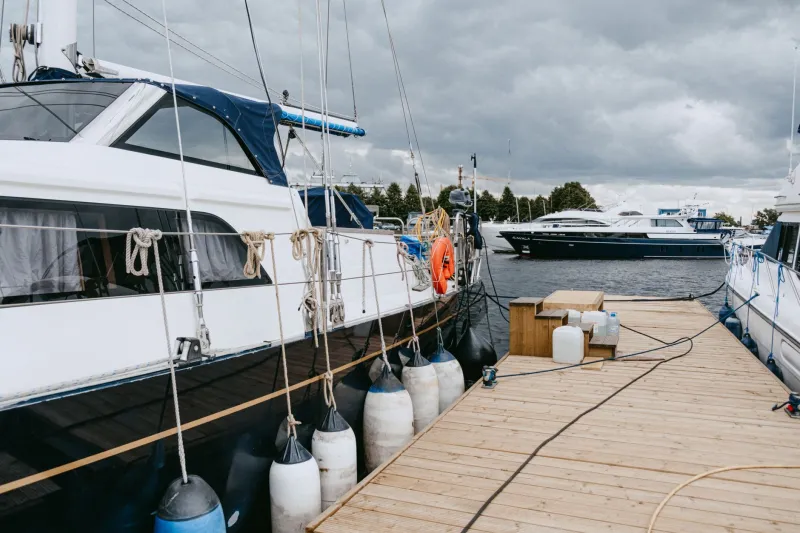
Photo: Frank Schulenburg, CC BY-SA 4.0, via Wikimedia Commons
You’ve found the one. The survey is clean enough, the seller is keen, and the price feels sensible. Then someone mentions transport, and the number that was going to be your boat budget quietly turns into your boat-plus-logistics budget.
Moving a boat by road in the UK is not like collecting a car. It is a small project with its own cast: a haulier, a crane or hoist at each end, maybe a rigger, a yard with space, and a pile of paperwork if the boat is wider or taller than the ordinary. None of it is mysterious, but all of it costs money. The trick is to price the haul before you shake hands, not after.
First, work out what you are actually moving
Transport quotes live and die on dimensions. Not the glossy brochure length, either. You need the length overall, the beam, the weight, the draft, the keel type and the height on the trailer or cradle. A bilge-keeler on a road trailer is a different beast from a fin-keeler that needs a low-loader and a crane.
Ask the seller for the builder’s figures, then verify them. If the boat is ashore, a weighbridge ticket is worth having. If it is afloat, the haulier will want to know what they are lifting. Guessing is how quotes turn into variations, and variations always seem to travel in one direction.
The quote is not the cost
A haulage quote is usually just that: the lorry and the driver. It may not include the lift out of the water at the seller’s end, the lift onto the transport, the lift off at your end, the crane hire, the yard’s handling charge, the mast step, the rigger, or the hardstanding while you wait for a launch slot.
This is where sensible deals get stretched. A boat sitting in a marina may need a hoist booking, a pressure wash, blocking and a cradle. Your destination yard may charge for lifting, blocking, launching and a week on the hard. If the mast is coming down, that is another job at each end. If the mast is staying up, the transport becomes a tall-load conversation, which is its own expense.
Get every element in writing. Ask what happens if the lift is cancelled because of weather. Ask who pays for a second crane visit. Ask whether the quote includes permits and escorts, or whether those are billed on top.
Wide loads, tall loads and the paperwork nobody wants
Most trailer boats slip under the radar. Once you go beyond standard road widths — broadly over 2.9 metres — you are into abnormal-load territory, with notifications, route restrictions and, depending on the load, escort vehicles. Height matters too. A sailboat with the mast up is not just wide; it is a low-bridge and overhead-wire problem looking for a route survey.
A reputable haulier will handle this, but it takes time and it costs money. It can also affect dates. Abnormal loads often travel outside peak hours, and some routes have curfews or weight limits. If you are buying in November 2026 and hoping to splash before Christmas, the paperwork clock is already ticking.
Ask the transport company who is responsible for permits, who books escorts, and what happens if a route is refused. Do not assume the driver will sort it at the lay-by.
Mast down, mast up
For most sailboats, the practical answer is mast down. That means a rigger at the seller’s end to disconnect stays, wiring and maybe the boom, and a rigger at your end to step it again. It is not a five-minute job, and it is rarely included in the haulage price.
Budget for two mast steps, not one. Ask whether the rigger will tune the rig after stepping, and whether the marina requires proof of insurance for lifting. If the mast is deck-stepped, check the condition of the mast foot and the wiring before it comes down. It is much easier to sort a corroded connector on the hard than halfway up a mast in April.
Hardstanding is not free storage
Boats rarely go from lorry to water in the same afternoon. Yards are busy, tides matter, and launch slots get booked. You may need a week on hardstanding, a cradle or blocks, and insurance that covers the boat ashore. Some yards charge daily; others charge by the lift and launch package. A cheap haulage quote with three weeks of hardstanding attached can stop being cheap very quickly.
Ask about access too. Can the lorry get into your destination yard? Are there height barriers, narrow lanes or weight restrictions? If the yard is down a single-track road with a low tree canopy, the haulier needs to know before the morning of the move.
The questions to ask before you agree a price
- Is the quote all-in, or does it exclude cranes, lifts, permits, escorts and mast work?
- Who books the crane or hoist at each end, and who pays if the slot is missed?
- Is the boat insured during the lift and during the road move? Whose policy covers what?
- How long can the boat sit on hardstanding at each end, and what does it cost per day?
- Does the destination yard have a launch slot, or are you joining a queue?
- What are the access restrictions at both ends — width, height, weight, tides, opening hours?
- If the mast is coming down, who disconnects and reconnects the rigging and electronics?
- What is the cancellation policy if the weather turns or the yard falls behind?
Do the maths before you make the offer
Take a simple example. A £18,000 boat 250 miles away might need £1,200 of haulage, £500 for a crane at each end, £350 for two mast steps, £300 for hardstanding and £150 for permits or admin. That is £2,500 before you have bought a fender. Suddenly the boat is a £20,500 purchase, and your negotiation position changes.
That does not mean walk away. It means treat transport as part of the purchase price. Ask the seller to include the cradle, or to contribute towards the lift-out. Compare the total landed cost with a similar boat closer to home. Sometimes the cheaper local boat is the better buy, even if the asking price is higher.
Road transport is not glamorous, and it rarely makes it into the photos. But it is part of the deal. Price the haul before you fall for the hull, and the boat you buy will be the one you can actually afford to get home.